
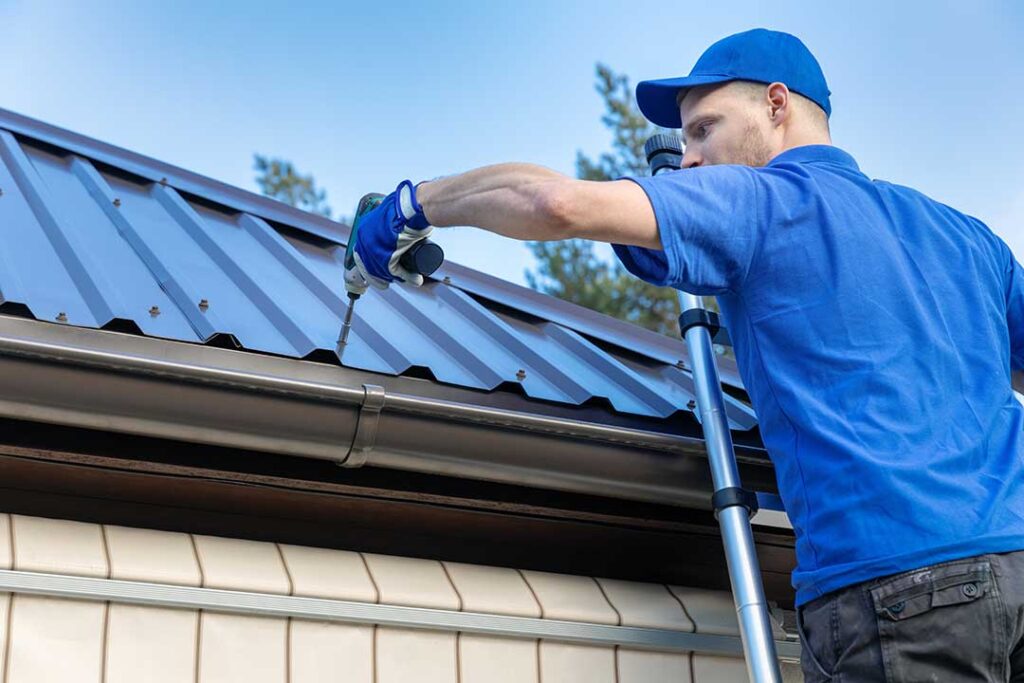
When is roof work safe to do yourself?
Roof work is safest for a homeowner when it can be completed from the ground or from a stable, properly positioned ladder, without walking on a steep, wet, icy, fragile, or unfamiliar roof. Small maintenance tasks such as clearing visible debris from gutters, replacing an accessible downspout connection, or inspecting attic signs of moisture may be reasonable do-it-yourself projects.
Work becomes significantly more hazardous when it involves climbing onto the roof, handling heavy materials, working near electrical equipment, removing roofing layers, or repairing areas that may be structurally weakened. In Gansevoort, NY, seasonal snow, freezing temperatures, wind, and wet conditions can make a roof unsafe even when it appears manageable from the ground.
Which roof tasks are usually reasonable for homeowners?
Some roofing-related jobs do not require stepping onto the roof. These are generally lower-risk when performed carefully:
- Looking at shingles, flashing, gutters, and vents from the ground with binoculars
- Removing leaves and loose debris from gutters while standing on a secure ladder
- Checking the attic for damp insulation, water stains, mold-like growth, or daylight
- Replacing a damaged gutter screen or reattaching a loose downspout section
- Trimming branches that touch or overhang the roof, provided the work does not require climbing into the tree
- Photographing suspected damage for documentation
- Temporarily placing a container under an interior leak
Even these tasks require attention to ladder placement, weather, overhead wires, and footing. A person should not work alone if a fall, sudden storm, or medical emergency could leave them unable to get help.
Replacing a few shingles may appear simple, but it usually requires climbing onto the roof, lifting nearby shingles, using roofing nails, and walking on a surface that may be brittle or slippery. The repair itself may be small while the fall risk remains serious.
What conditions make a roof unsafe?
Weather is one of the clearest reasons to postpone roof work. Do not climb onto a roof during or soon after:
- Rain, freezing rain, snow, or frost
- Strong or gusty wind
- Ice formation or melting snow
- Wet leaves or heavy dew
- Thunderstorms or rapidly changing weather
- Extreme heat that makes roofing materials soft and surfaces uncomfortable to touch
Cold weather creates additional problems. Shingles may become stiff and crack when handled, seal strips may not bond properly, and ladders can slide on frozen ground. Snow can also hide roof edges, skylights, weak spots, and uneven surfaces.
After a major storm, assume the roof may be less stable than it looks. Wind can loosen shingles, damage flashing, and disturb roof decking. Falling branches may create concealed structural damage around the impact area.
How does roof slope affect do-it-yourself safety?
A low-slope roof is not automatically safe, and a steep roof is not automatically unsafe, but slope strongly affects the likelihood of a fall. The steeper the surface, the more difficult it is to maintain balance while carrying tools or materials.
Roof pitch is commonly described as the amount of rise for every 12 inches of horizontal distance. A roof that rises 6 inches for every 12 inches of run is called a 6-in-12 pitch. As pitch increases, walking becomes harder, especially when the surface is covered with granules, moss, frost, or debris.
Avoid walking on a roof when:
- The slope cannot be judged confidently
- The surface is soft, spongy, or visibly sagging
- Shingles are heavily worn or missing
- There are skylights, solar equipment, or fragile panels
- The roof edge is more than one story above the ground
- There is no safe method for maintaining three points of contact
- Tools or materials would need to be carried while climbing
A fall from roof height can cause severe injury even when the person lands on grass or soil. Gutters, fences, decks, rocks, and landscaping can make the landing area more dangerous.
Is ladder work safe for a homeowner?
Ladder use is often more dangerous than the repair itself. Set the ladder on firm, level ground, keep the base clear of ice and mud, and extend the ladder above the roof edge when it is being used to access a roof. The ladder should rest against a sound, stable surface rather than a gutter or loose trim.
Before climbing, check that:
- The ladder is in good condition and fully opened or locked
- The feet are not sitting on snow, ice, loose gravel, or wet leaves
- The angle is stable
- No electrical lines are nearby
- Tools can be carried in a belt or raised separately
- Another person knows where the work is taking place
Never stand on the top step of a stepladder. Avoid leaning sideways, overreaching, or moving a ladder while someone is on it. If the ladder must be placed on a slope, uneven ground, or a slippery surface, the setup is not suitable for casual roof maintenance.
When should a homeowner stay off the roof?
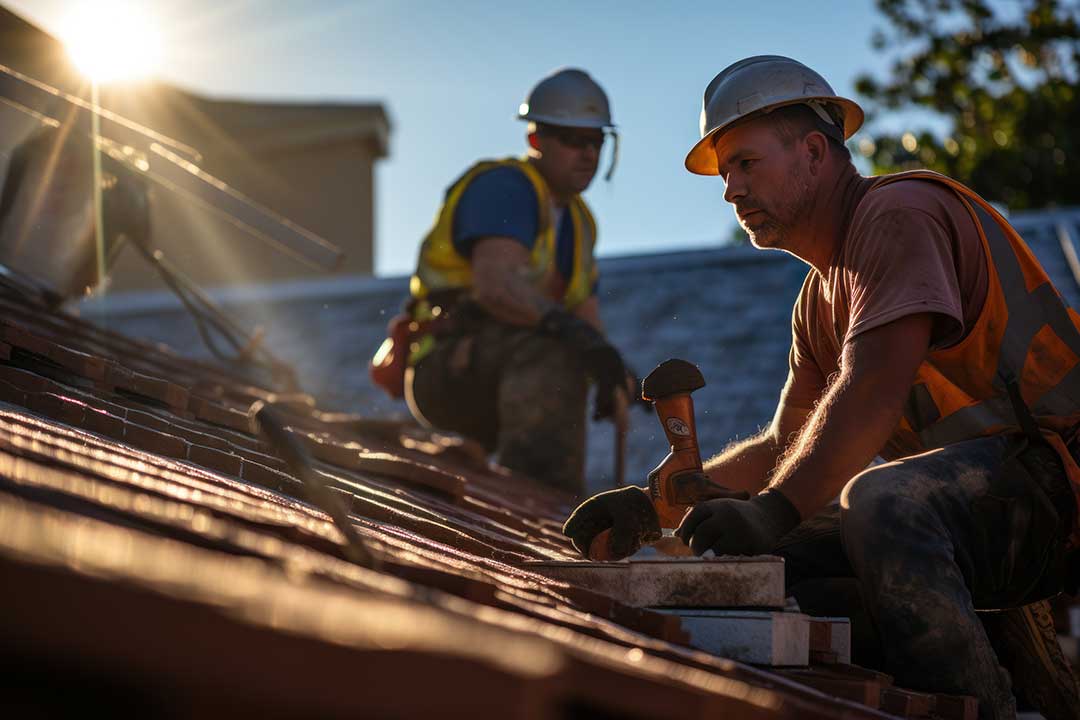
Some situations should be treated as clear stop signs. Stay off the roof when there is visible sagging, a soft area, extensive storm damage, a partially collapsed section, exposed electrical equipment, or uncertainty about where the roof structure can safely support weight.
Roof access is also inappropriate when the work requires:
- Removing large areas of shingles or underlayment
- Repairing roof decking or rafters
- Working around chimneys, skylights, or complicated flashing
- Using power tools near an edge
- Applying heated materials, solvents, or open flame
- Carrying bundles of shingles
- Working above a second-story drop
- Installing or repairing roof-mounted electrical equipment
- Entering a confined attic space with poor ventilation or possible contamination
A roof may look intact while the decking beneath it has weakened from long-term moisture. Water stains, sagging ceiling areas, musty odors, and damp insulation can indicate a problem that is not suitable for a quick surface repair.
Can roof work be done after winter?
Spring is a common time to inspect roofs, but early spring conditions may still be unsafe. Snowmelt can expose damaged shingles while leaving ice in shaded areas, and freeze-thaw cycles can loosen flashing or create concealed moisture.
A practical inspection sequence is to start from the ground, then check the attic, ceilings, and upper walls. Look for:
- Missing, lifted, cracked, or curled shingles
- Granules collecting in gutters or at downspout outlets
- Rusted or displaced flashing
- Water stains near roof penetrations
- Sagging roof lines
- Damp insulation or peeling interior paint
- Tree limbs rubbing against the roof
Do not assume that a leak appears directly below the damaged area. Water can travel along roof decking, rafters, insulation, and wall cavities before becoming visible indoors.
What permits or rules may apply?
Roofing work can involve local building requirements, especially when a project changes the roof structure, adds insulation, alters roof coverings substantially, or affects ventilation and drainage. Requirements can vary by the type and scale of work.
Before beginning a significant project, verify applicable requirements with the local building department and review any rules connected to the property. Homeowners should also consider whether the planned work could affect insurance coverage, resale documentation, or compliance with required safety practices.
For a simple visual inspection or minor ground-level maintenance, formal permitting is less likely. That does not eliminate the need for safe ladder use or proper handling of debris.
What is the safest decision rule?
A useful rule is: if the task requires stepping onto the roof and the risk cannot be controlled with proper fall protection, stable access, suitable weather, and sound knowledge of the roof system, it is not a safe do-it-yourself job.
Homeowners can still play an important role by identifying warning signs, documenting damage, controlling interior leaks, clearing accessible gutters, and preventing avoidable hazards. Roof work should stop immediately if conditions change, the surface becomes slippery, hidden damage is found, or the task requires equipment or skills beyond what is available.
For residents dealing with snow, ice, wind, and repeated freeze-thaw cycles, waiting for a dry, calm day is often the simplest safety improvement. A small repair is never worth taking an unnecessary fall.
