
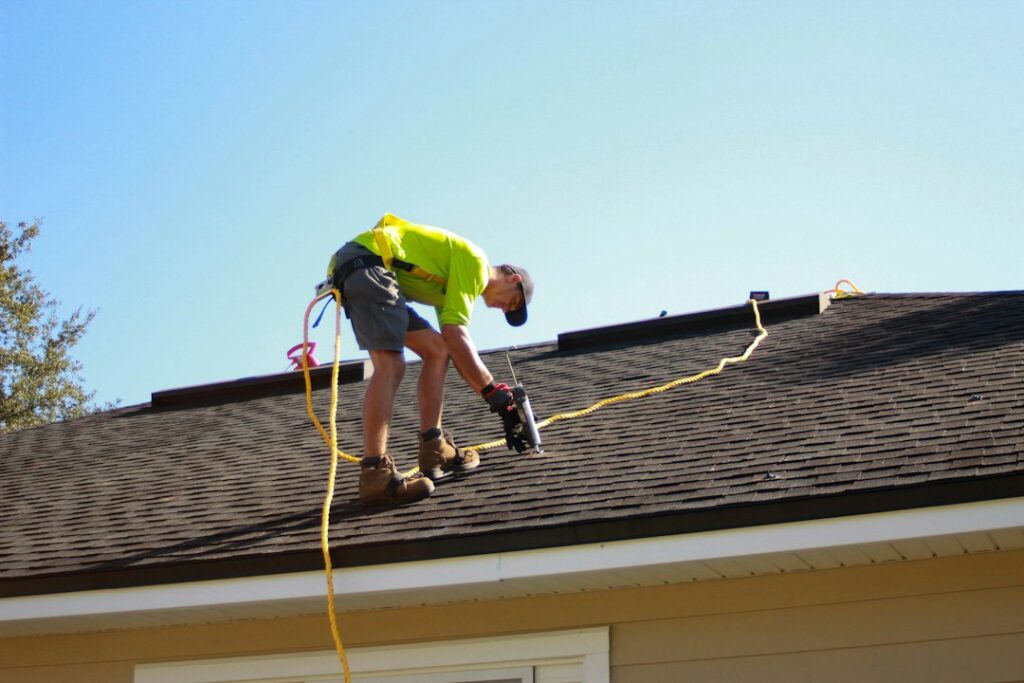
Roof repairs are often urgent, but urgency should not force a rushed decision. A careful selection process helps residents compare companies fairly, understand the proposed work, and avoid paying for repairs that are unnecessary, incomplete, or poorly suited to the home.
What should a roofing company explain before work begins?
A reliable roofing company should be able to describe the problem in plain language, show where the damage is located, and explain why a particular repair is being recommended. A vague statement such as “the roof needs work” is not enough.
Ask for details about:
- The suspected source of the leak
- Whether the damage affects shingles, flashing, vents, valleys, decking, or gutters
- How much of the roof needs repair
- Whether temporary protection is needed
- What materials will be used
- How the completed repair will be checked
Water does not always enter directly above the stain on a ceiling. It may travel along roof decking, rafters, insulation, or framing before appearing indoors. A useful inspection looks beyond the visible symptom instead of simply covering the area where water was noticed.
Photos from the roof or attic can also make the explanation easier to understand. Homeowners should be cautious if a company refuses to identify the damaged area, will not explain the repair method, or immediately recommends extensive replacement without examining the roof carefully.
How many roofing companies should be compared?
For a non-emergency repair, comparing at least two or three written proposals is generally reasonable. The goal is not simply to find the lowest price. It is to determine whether each company is diagnosing the same problem and including similar work.
Proposals should be compared line by line. A lower price may reflect omitted items such as:
- Replacement of damaged roof decking
- New flashing around chimneys or penetrations
- Ice-barrier or underlayment work
- Removal and disposal of failed materials
- Cleanup and magnetic nail collection
- Repairs to gutters, fascia, or ventilation components
- Permit-related work when applicable
A proposal that uses broad phrases such as “repair roof as needed” leaves too much uncertainty. A clearer document identifies the location, approximate scope, materials, labor, cleanup responsibilities, payment schedule, and any conditions that could change the price.
What credentials and insurance should homeowners verify?
New York does not use one statewide licensing system for every home improvement contractor, so homeowners should verify the requirements that apply to the property and the work being proposed. Local permit or registration rules may differ depending on the responsible building department and the type of repair.
Insurance verification is especially important. Ask for current proof of:
- General liability insurance
- Workers’ compensation coverage when employees are involved
- Disability benefits coverage when applicable
The certificate should be current and issued by the insurer or an authorized insurance representative. A company’s verbal assurance is not the same as documentation.
It is also useful to confirm the company’s legal business name and physical contact information. Be cautious with anyone who cannot provide a written contract, pressures a homeowner to sign immediately, or requests a large cash payment before the scope is clearly documented.
What should be included in a roofing repair contract?
A written contract protects both sides by defining what is supposed to happen. It should be readable and specific rather than built around verbal promises.
Look for:
- The contractor’s name, address, and contact information
- A description of the exact repair
- Materials, quantities, and manufacturer specifications when relevant
- Labor charges and payment terms
- A start-time estimate and expected duration
- Cleanup and disposal responsibilities
- Warranty terms for workmanship and materials
- Procedures for concealed damage or change orders
- Information about permits, if required
- Cancellation rights and required notices
A change order should be written before additional work begins. For example, a roofer may discover rotted decking after removing shingles. That possibility can be addressed in the original contract by explaining how such work will be priced and approved.
Avoid signing documents that assign insurance benefits without understanding the legal and financial consequences. A roofing company may document storm damage, but homeowners should retain control over insurance communications and should never rely on promises that a claim will automatically be approved.

How does local weather affect roof repair decisions?
Gansevoort, NY experiences cold winters, snow, freezing temperatures, rain, wind, and seasonal temperature swings. These conditions can expose weak flashing, deteriorated sealants, loose shingles, and drainage problems.
A repair proposal should account for more than the visible shingle damage. Important questions include:
- Is water collecting because of blocked or undersized drainage?
- Has repeated freeze-thaw movement opened a seam?
- Are metal flashings corroded or improperly installed?
- Is snow or ice accumulating at a roof edge?
- Has wind lifted surrounding shingles that appear intact from the ground?
- Is attic ventilation contributing to condensation or uneven roof temperatures?
Winter repairs may be limited by snow, ice, unsafe roof surfaces, and materials that do not seal properly in cold conditions. A company should explain whether a temporary repair is needed until weather permits permanent work. Homeowners should not allow workers to take unnecessary risks on icy roofs, and they should avoid climbing onto the roof themselves after a storm.
What are warning signs of an unreliable roofing company?
Certain behaviors deserve extra caution. These include:
- Pressure to sign immediately
- A demand for full payment before work starts
- A proposal that contains no written scope
- Unusually low pricing with no explanation
- Claims that insurance will pay for everything
- Requests to sign blank or incomplete documents
- Refusal to provide insurance information
- No discussion of attic damage, flashing, ventilation, or cleanup
- A sudden recommendation for full replacement after a limited inspection
- Unwillingness to provide references for similar repair work
Storm-related damage often brings temporary workers into an area. A company does not become trustworthy merely because someone arrives soon after a severe-weather event or presents photographs of other roofs.
Should homeowners repair a roof themselves?
Minor maintenance, such as clearing leaves from a safely accessible gutter or observing attic conditions, may be manageable for some homeowners. Roof walking, shingle removal, flashing work, and leak investigation are more hazardous than they may appear.
Professional help is justified when the roof is steep, wet, icy, damaged by a storm, or near electrical lines. Structural damage, active water intrusion near electrical equipment, sagging roof areas, and large openings should be treated as safety concerns rather than routine maintenance tasks.
Homeowners can still contribute useful information by recording when the leak appears, photographing interior stains, checking the attic from a safe location, and noting recent wind, rain, or snow conditions.
What is the most sensible way to make the final choice?
Choose the company that provides the clearest diagnosis, complete written scope, current insurance documentation, reasonable payment terms, and a repair plan suited to the roof’s condition and the season. The lowest bid is not necessarily the least expensive outcome if it leaves hidden damage, poor flashing, or recurring leaks unresolved.
A sound decision is based on comparable proposals and understandable answers—not pressure, dramatic claims, or promises that seem too certain. For area households, careful documentation matters because roof repairs must withstand repeated cycles of rain, snow, ice, wind, and temperature change.
