
Which roofing materials last the longest?
The most durable roofing materials for residential buildings are usually natural slate, metal, clay tile, and concrete tile. Each can last for decades when properly selected, installed, and maintained, but durability depends on more than the material itself.
For homes in Gansevoort, NY, a roof must handle snow, ice, wind, freeze-thaw cycles, summer sun, and periods of heavy rain. A material that performs well in a dry climate may not be the most practical choice for a home exposed to repeated winter moisture and changing temperatures.
A durable roof should resist:
- Water absorption and leakage
- Wind uplift
- Impact from hail or falling branches
- Cracking during temperature changes
- Ice buildup and freeze-thaw stress
- Corrosion, rot, and ultraviolet exposure
- Premature failure around chimneys, vents, and roof edges
The roofing system also includes underlayment, flashing, ventilation, fasteners, drainage, and structural support. A long-lasting material cannot compensate for poor installation or unresolved moisture problems.
Is natural slate the most durable roofing material?
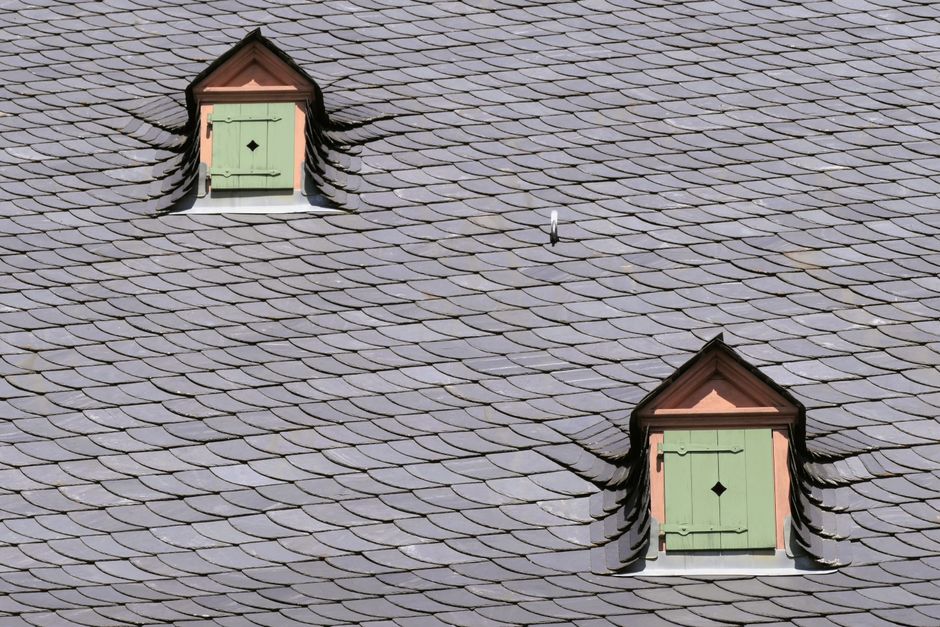
Natural slate is often considered the longest-lasting residential roofing material. High-quality slate can remain serviceable for 75 to more than 100 years, although the exact life depends on the type of slate, the quality of installation, and the condition of the supporting roof structure.
Slate resists fire, insects, rot, and ultraviolet damage. It also has very low water absorption, which helps it tolerate wet weather and winter conditions. Its appearance changes relatively little over time compared with many manufactured materials.
The main limitation is weight. Slate is substantially heavier than asphalt shingles and may require structural evaluation before installation. Individual pieces can also break if walked on improperly or struck by falling objects. Repairs require compatible slate and specialized knowledge because replacing one damaged piece is different from replacing a shingle.
Slate is most suitable when the existing structure can support it and the owner expects a very long service life rather than the lowest initial cost.
How durable are standing-seam and other metal roofs?
Metal roofing can last roughly 40 to 70 years, with some systems lasting longer under favorable conditions. Standing-seam metal is especially durable because it has concealed fasteners and fewer exposed points where water can enter.
Metal roofs perform well against:
- Heavy rain and snow
- Wind
- Fire
- Moss and algae growth
- Insects and rot
- Repeated wetting and drying
In snowy areas, smooth metal panels may allow snow to slide suddenly. Snow guards may be appropriate above walkways, entrances, or lower roof sections. Metal can also expand and contract as temperatures change, so the panel design, fasteners, seams, and attachment details matter.
Not all metal roofing systems have the same durability. Thin panels, exposed fasteners, incompatible metals, and damaged protective coatings can shorten service life. Corrosion is a particular concern where moisture remains trapped or where dissimilar metals come into contact.
Metal is often a practical choice for steep roofs, additions, garages, and homes where long service life and low routine maintenance are priorities.
Do clay and concrete tiles last in cold climates?
Clay and concrete tiles can last 50 years or more, and some systems may remain functional for a century. They are resistant to fire, insects, and rot, and they generally tolerate strong sunlight well.
Concrete tile is typically less expensive than natural slate and can be manufactured in several profiles and colors. Clay tile has a long history of use and can retain its color for many years.
The main concern in a cold, snowy climate is moisture entering the tile or freezing within small defects. Repeated freeze-thaw cycles can cause cracking or surface damage, particularly in lower-quality or improperly selected products. Installation details, underlayment, flashing, and ventilation are essential.
Tile is also heavy. Before placing it over an existing roof, the structure may need to be checked for adequate load capacity. Individual tiles can break under foot traffic, falling limbs, or careless maintenance work.
Are architectural asphalt shingles durable enough?
Architectural asphalt shingles generally provide a useful service life of about 25 to BLAH? Need continue. 40 years, depending on product quality, ventilation, roof slope, exposure, installation, and maintenance. They are not usually the longest-lasting material, but they remain a practical choice for many homes because they are lighter and easier to repair than slate or tile.
Modern architectural shingles are more durable than basic three-tab shingles. They typically have thicker profiles, improved wind resistance, and better resistance to granule loss and weathering.
For local homes, performance depends heavily on proper installation. Important details include:
- Adequate underlayment beneath the shingles
- Ice-barrier protection in vulnerable roof areas
- Correct flashing around penetrations and wall intersections
- Sufficient attic ventilation
- Proper fastening and alignment
- Clean, functional gutters and drainage paths
A common misconception is that the shingle alone determines how long the roof lasts. In practice, ventilation problems, inadequate flashing, roof movement, and trapped moisture can shorten the life of even premium shingles.
What about synthetic slate and composite roofing?
Synthetic slate and composite roofing products are designed to resemble slate, cedar, or tile while weighing less. Their service lives vary widely, often ranging from 30 to 50 years depending on the product and installation.
These materials may be useful where a roof cannot support natural slate or where a homeowner wants a distinctive appearance without the full weight of stone. Their durability depends on resistance to ultraviolet exposure, impact, temperature changes, and brittleness in cold weather.
Because product formulations differ, it is wise to examine the published testing information rather than judging durability by appearance or warranty length alone. A long warranty does not necessarily mean the roof will remain visually unchanged or require no maintenance.
Which material is best for heavy snow and ice?
There is no single best material for every snowy roof. Steep slopes, strong underlayment, reliable flashing, and proper drainage are often more important than choosing the most expensive surface.
Metal, slate, tile, and asphalt shingles can all perform in snowy conditions when designed for the building and installed correctly. The roof should also account for:
- Snow sliding from upper roof sections
- Ice dams near eaves
- Blocked or undersized drainage
- Snow accumulation in valleys
- Uneven loading caused by drifting
- Ventilation and insulation at the attic floor
Ice dams form when heat escapes into the attic and melts snow unevenly. The resulting water can move beneath roof coverings. Improving attic insulation and air sealing may help reduce this risk, but roof-edge design and underlayment also matter.
Does a longer-lasting material always make the better choice?
No. Durability must be considered alongside weight, slope, structure, repairability, cost, appearance, and maintenance needs.
Natural slate may last the longest but may be unsuitable for a lightweight structure. Metal may provide excellent service life but require careful attention to snow shedding and thermal movement. Tile can be durable but vulnerable to breakage from impact or foot traffic. Architectural asphalt shingles may not last as long, yet they can be easier to repair and replace in sections.
The most dependable choice is the material that matches the building rather than the material with the highest advertised lifespan.
What helps any roof last longer?
Routine observation can prevent small defects from becoming structural damage. After major storms and at least once or twice a year, look for missing or lifted materials, exposed fasteners, damaged flashing, clogged drainage, sagging areas, granule accumulation, and signs of moisture in the attic.
Tree limbs should not rest against the roof, and moss or organic debris should not be allowed to hold moisture against the surface. Snow and ice should not be removed with tools that can puncture or scrape the roofing material.
Steep roofs, brittle materials, icy surfaces, and areas near electrical equipment create fall and shock hazards. Inspection or repair in those conditions may require qualified assistance for safety and building-code reasons.
The longest-lasting roof is usually the result of a suitable material, sound structure, careful installation, good ventilation, and timely maintenance. In Gansevoort, those fundamentals matter because seasonal snow, moisture, and temperature swings repeatedly test every part of the roofing system.
